

SPARC’s innovations in surgical endoscopy allow for improved patient outcomes and cost savings for the Canadian healthcare system.
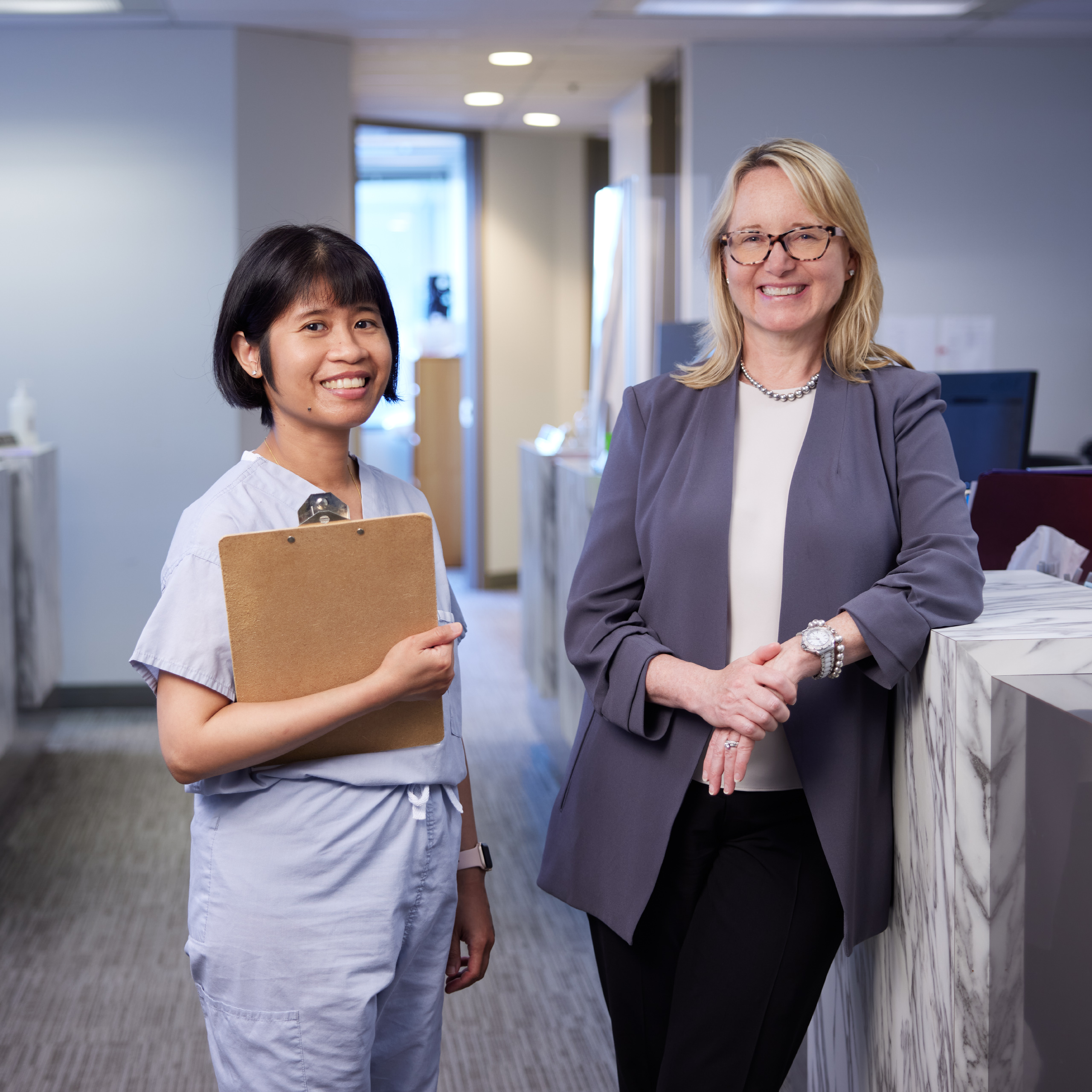
World-class team, world-class care
St. Paul’s Hospital Advanced Endoscopic Resection Centre (SPARC) offers minimally invasive endoscopic resection techniques as a proven treatment for pre-cancerous lesions and early cancers. This is done via a flexible camera (endoscope) inserted into the mouth or rectum and does not create an incision.
These techniques are a critical advance in the management of gastrointestinal cancers as they provide an organ-sparing alternative that is effective, safe and cost-effective. The majority of SPARC patients are in British Columbia, with some from neighbouring provinces.
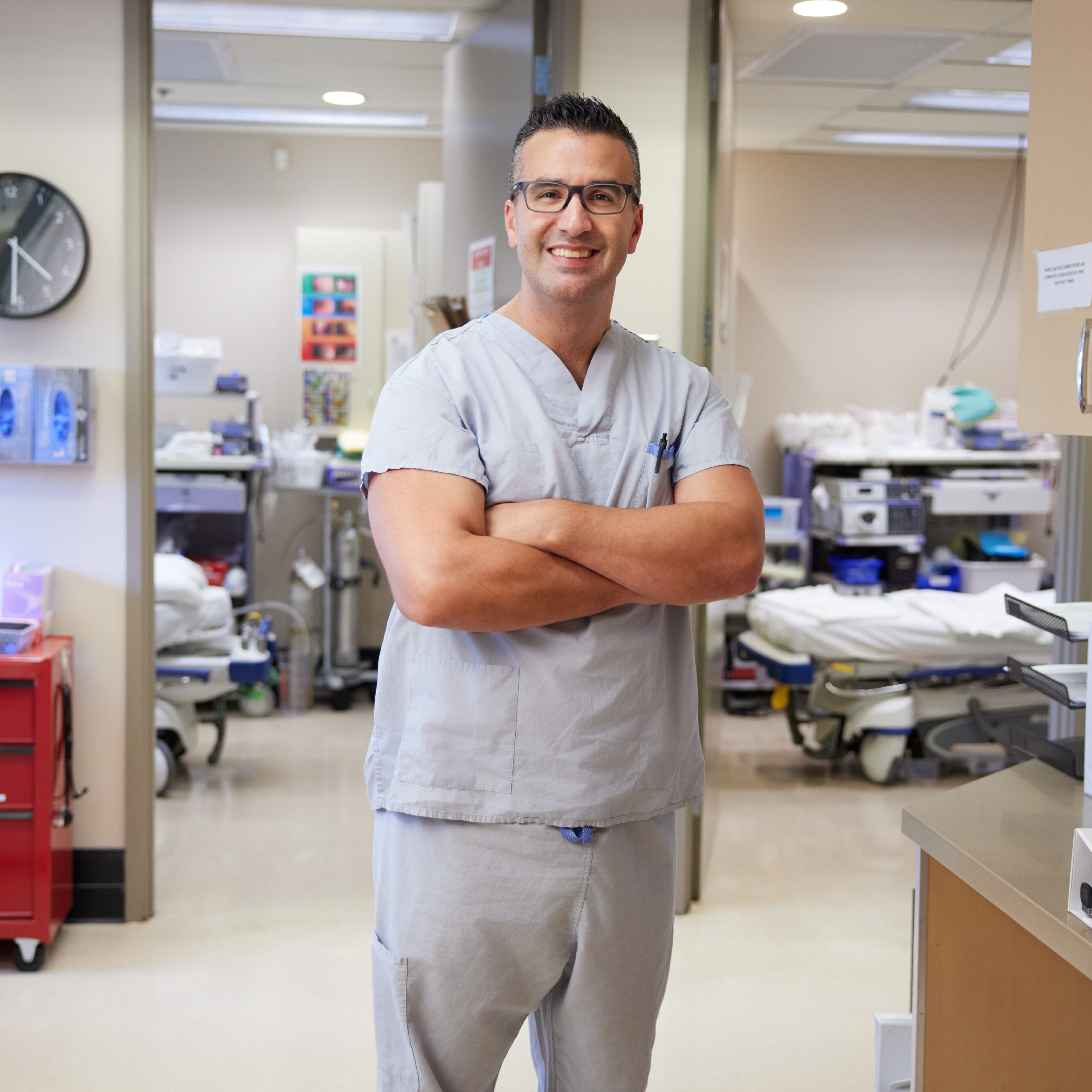
A proven alternative to surgery
Cancer is a leading cause of death among Canadians. This includes cancers of the GI tract, which includes esophageal, gastric, colon and rectal cancers. Together, they represent the most frequent type of cancer and most common cause of cancer-related deaths worldwide.
Historically, GI cancers—and the pre-cancerous polyps or lesions that give rise to them—have been managed by surgery, such as the removal of the esophagus, the stomach, the colon and the rectum and/or anus. Minimally invasive endoscopic resection techniques provide an alternative treatment: pre-cancerous lesions and early cancers are removed by a flexible camera called an endoscope or colonoscope without creating an incision. These techniques are a critical advance in patient care as they provide an organ-sparing alternative that is effective but also safe and less costly. These techniques include endoscopic mucosal resection (EMR) and endoscopic submucosal dissection (ESD). Moreover, analogous techniques have now been developed for motility disorders of the gastrointestinal tract known as peroral endoscopic myotomy (POEM).
SPARC quick facts
5-12%
People with chronic reflux at risk of developing BE
Barrett’s esophagus (BE) is a change in the lining of the esophagus that increases the risk of esophageal cancer. SPARC treats BE with endoscopic resection, radiofrequency ablation, hybrid argon plasma coagulation and/or cryotherapy.
1 in 13
People found with large polyps during a colonoscopy
SPARC doctors can safely remove large colon polyps without surgery. The first-line treatment for most large polyps is an endoscopic resection.
H.pylori
Can increase gastric cancer risk
Helicobacter pylori can cause chronic atrophic gastritis, which can increase gastric cancer risk. Patients with this condition should have regular endoscopies to prevent gastric cancer.
1 in 10K
Babies born with FAP, thus predisposed to develop polyps.
People with polyposis are prone to developing polyps and face a higher risk of colon and rectal cancer, making colonoscopy surveillance essential. The most common syndromes are FAP, MUTYH-associated polyposis and serrated polyposis.
Our treatments are minimally invasive, safe, and fast
Many early gastrointestinal tumours are small and can be removed with conventional endoscopic techniques. However, larger lesions or lesions that have visual characteristics of an early cancer should be removed in one piece for adequate pathology assessment. Previously, there was no option to treat these conditions other than with surgery. The field of interventional endoscopy has allowed SPARC physicians to offer minimally invasive endoscopic treatments that are done with no external excisions, allowing for a faster recovery. The SPARC team’s consultative services allow for assessment of the best treatment based on your lesion and personal preferences.
Some of the conditions we treat
While there is a broad scope in interventional endoscopy, here are some of the more common conditions that we treat at SPARC.
Large colorectal polyps and early colorectal cancer
Endoscopic resection is the first-line treatment strategy for the majority of large colorectal polyps.
Polyposis and hereditary cancer syndromes
These syndromes affect the cells lining the colon and GI tract.
Barrett’s esophagus
This condition could lead to an increased risk of developing esophageal cancer.
Early esophageal cancer
Esophageal cancer is the third most common cause of death in Canada.
Achalasia and esophageal dysmotilities
Achalasia primarily affects the sphincter or muscle at the bottom of the esophagus.
What our patients have to say about SPARC

I was originally referred to Dr. Shahidi and the SPARC Program as my gastroenterologist was concerned about an early colon cancer. Dr. Shahidi walked me through the entire process of removing the lesion during colonoscopy. He did more than 100%! I am cancer free and cannot thank Dr. Shahidi and his team enough!
Clayton Sim Victoria, BC
It is hard to express how much I appreciate what Dr. Shahidi did for me. The Z-POEM procedure for my Zenker’s diverticulum was a life changing experience, and I cannot thank him and his team at the St. Paul’s Hospital Advanced Endoscopic Resection Centre enough. THANK YOU THANK YOU THANK YOU!!!!!!
Dan Larson Pitt Meadows, BC

At the age of 81, I was admitted into St. Paul’s Hospital after feeling ill while attending a concert. This was my first time in a hospital. Within a very short time I was assigned a medical team led by Dr. Shahidi. After having all the required tests I was diagnosed with esophageal cancer. Dr. Shahidi explained the treatment options and the different outcomes: traditional surgery or endoscopic resection, which is much less invasive. I chose the endoscopic resection; Dr. Shahidi is the leader in this field of medicine. It was the right choice for me. I feel 10 years younger, my stomach pains are gone, and I am looking forward to living a normal and happy life. My family and I consider ourselves lucky to have received the best medical advice and treatment by Dr. Shahidi and his team and the St. Paul’s Hospital staff.
Christian Walli Richmond, BC
Right from our first phone call Dr. Neal Shahidi was friendly, informative and communicative about the procedure. He was understanding and compassionate. He came highly recommended and seemed very experienced. His surgery on me was successful even though I had a very large polyp. I’m grateful he was willing to do my colonoscopy, and I had a good outcome.
N/A Abbotsford, BC
I have had several procedures done by Dr. Shahidi at St. Paul’s Hospital. Dr. Shahidi is an outstanding doctor both in skill and compassion. He always explains everything before the procedures to put me at ease. The nurses are always excellent, too. I am very happy with my outcome.
Naseem Somani Hjerpe Port Moody, BC
In the fall of 2020 doctors in Victoria discovered serious cell growth in my esophagus and sent me to Dr. Neal Shahidi at St. Paul’s Hospital for surgery. The operation was performed on March 19, 2021. Upon arrival at St. Paul’s, the staff made me feel comfortable and showed professionalism. The gastroenterology team were excellent and put me at ease. Dr. Shahidi was so kind and thorough in explaining the details and risks of the operation that I had complete confidence in him and his team. Dr. Shahidi is very good at his work and he enjoys his job.
Jim Brown Courtenay, BC
I first became a patient at St. Paul’s hospital in 2022, having surgery for esophageal cancer. I continue to visit for scoping every six months. Each time I arrive there is always staff to help direct me where to go. In the GI ward, I am looked after by a staff of competent nurses both before and after my procedure. I’m made comfortable and am well looked after until my wife is there to walk me out.
Kenneth Victoria, BC
I was having difficulty swallowing some of my food, had a scope in Kamloops, was told I had Barrett’s esophagus and was given a referral to Dr. Neal Shahidi at St. Paul’s Hospital in Vancouver.
Elizabeth Kamloops, BC
I was nervous initially, but long story short, I have been very impressed with Dr. Shahidi, the SPARC nurses, and how well I’ve been taken care of. I can now swallow, don’t worry so much about cancer and can thank them all for this. I highly recommend SPARC.
I found out I had esophageal cancer in March 2024 and was sent to Dr. Shahidi at St. Paul’s Hospital for surgery. The day of the operation Dr. Shahidi came in and said I had nothing to worry about and made me feel at ease. He is personable, knowledgeable and caring, and works well with his team. I feel confident in Dr. Shahidi’s care and advocate for more doctors like him: not only his amazing medical expertise but also his genuine compassion for his patients. I have been cancer-free since June 2024 and I thank Dr. Shahidi very much.
Debbie Lambert Cloverdale, BC
My well-respected gastroenterologist told me that a large polyp in my colon needed to be examined and removed by one of his colleagues, Dr. Eric Lam, at St. Paul’s Hospital. Throughout the ongoing process, I received exceptional care, support and compassion. While going to the hospital can be stressful, I always felt listened to and reassured. Outstanding teamwork, GI clinic team! I write this testimonial with profound gratitude.
Arlene O’Reilly Vancouver, BC
-

Equitable endoscopy care for underserved patients
Dr. Neal Shahidi is committed to advancing equity in endoscopic care for all British Columbians.
-

Successful 2025 CIHR team grant award
The international trial, led by Dr. Daniel von Renteln and joined by Dr. Neal Shahidi, will examine bleeding prevention techniques after large polyp removal.